An interactive map of the careers in your profession: where people start, the steps to senior roles, and what each one takes. Every role opens the live jobs for it on your job board.









Members want to know which roles exist in their field, what the next one takes, and who is hiring for it. Career path software answers all three on your site, so they stop looking elsewhere.
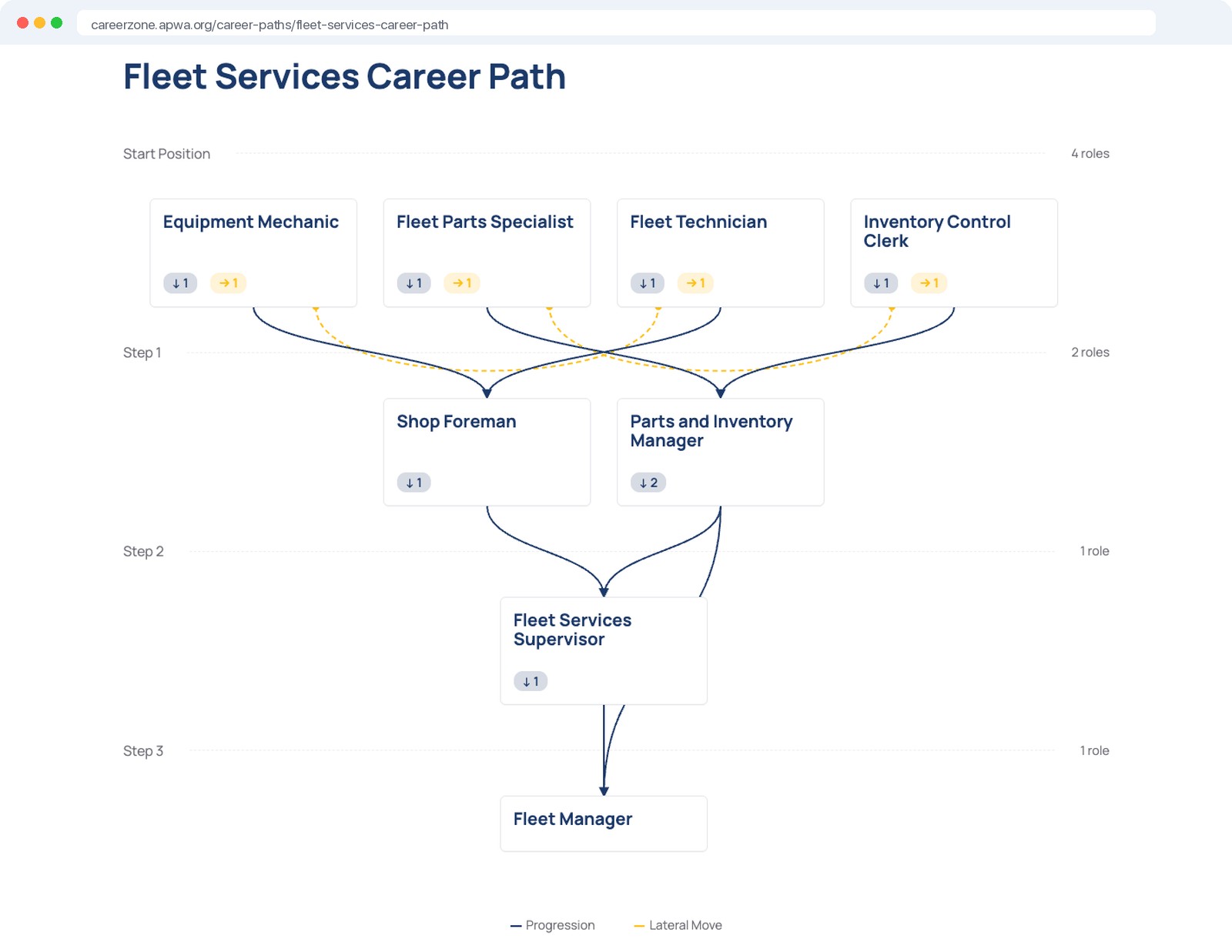
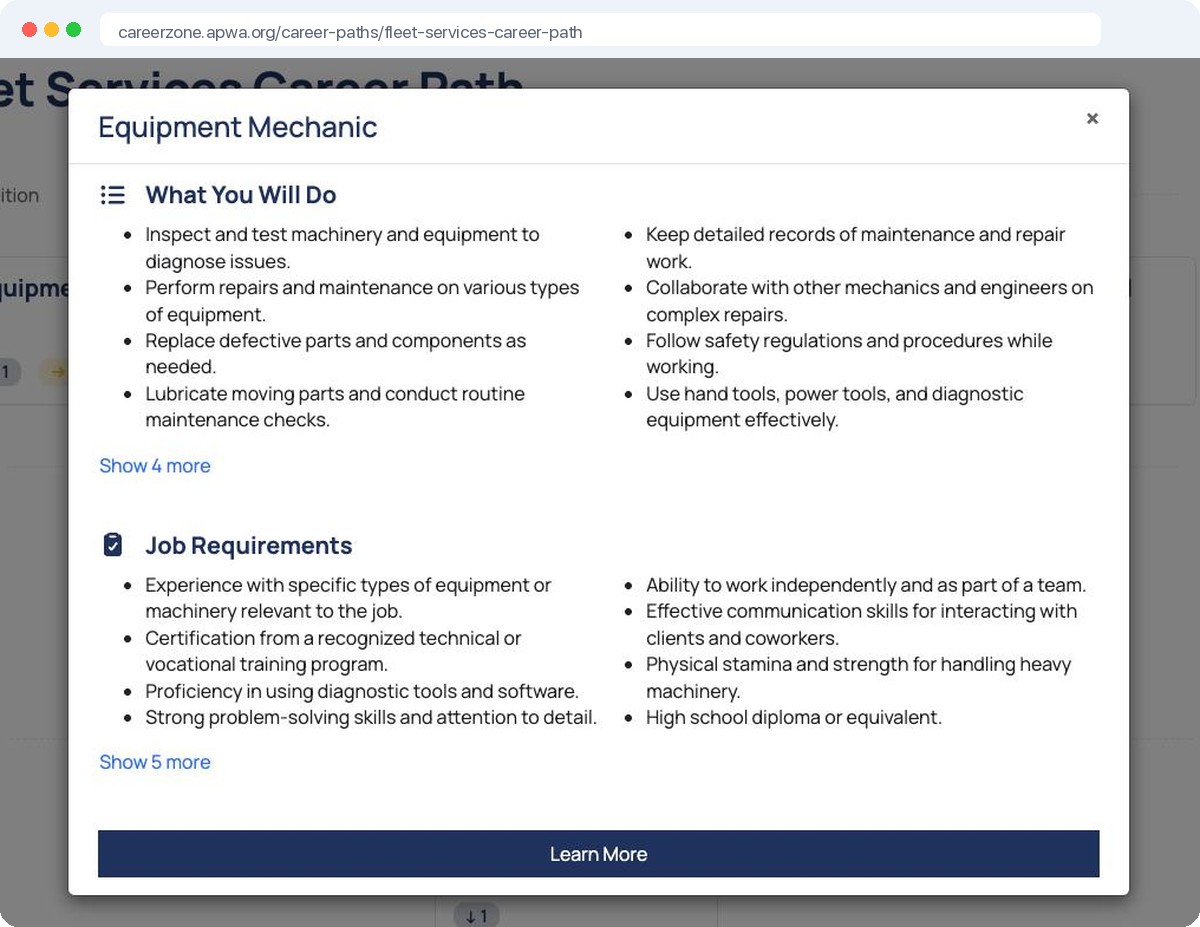
Every role in their specialty, the moves between them, and what each one requires. Click a role to read the job and see who is hiring for it.
A clear picture of the profession before they commit: where people start, where the roles lead, and what to study to get there.
Your site becomes the place members plan their careers. You define the paths for your profession, so the map reflects how your field actually works.
Career paths are organized the way your field is: by specialty, department, or practice area. Each path packages the roles in that area into a map, from the first job to the most senior, with a short description of the area and the titles it covers.
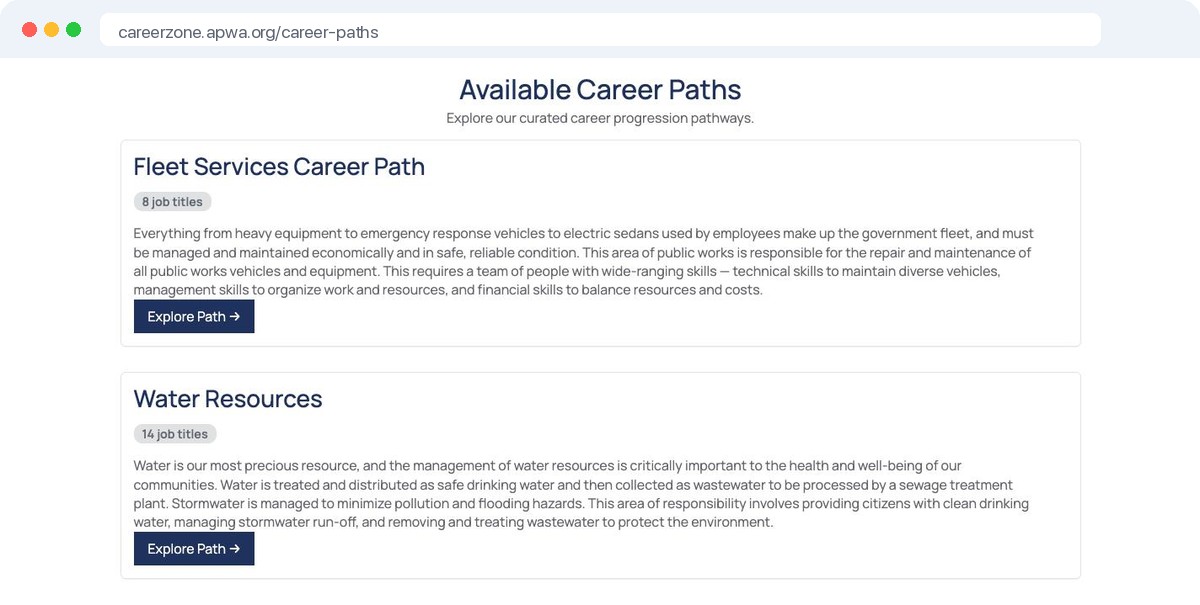
Each path is an interactive map. Roles sit in steps from the starting positions to the senior ones, with progression and lateral moves drawn between them. Members see the whole field at a glance instead of one job title at a time, and hover a role to highlight where it leads.
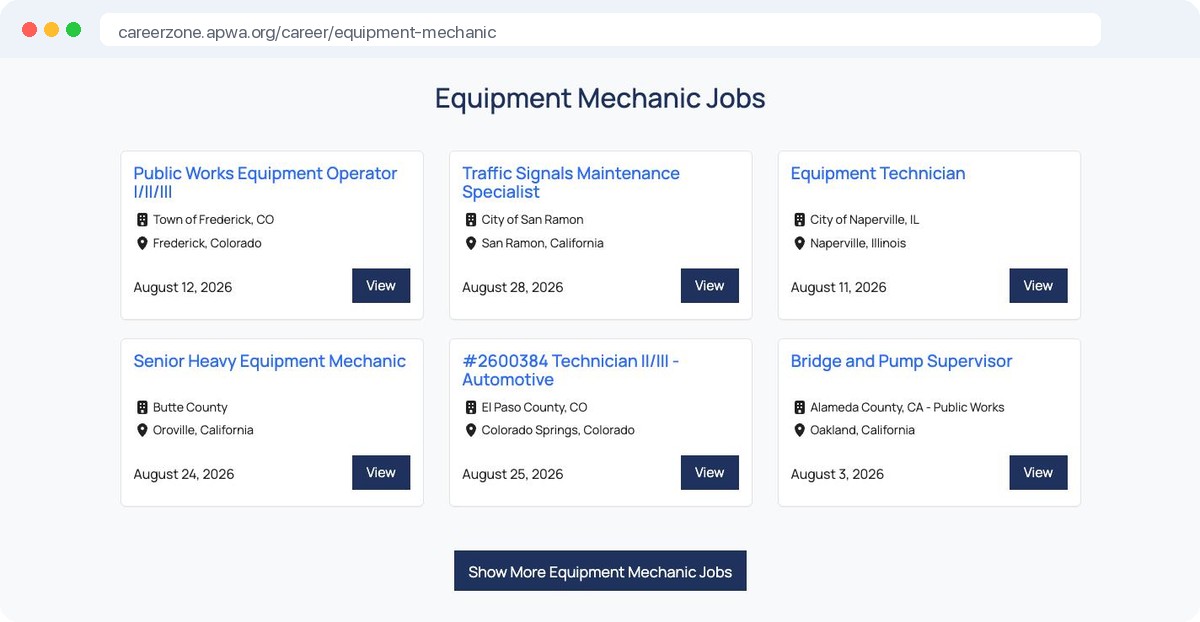
A career path is not a poster. Each role connects to the live jobs for that title on your job board, and members can have new ones emailed by title and zip code. Standalone career sites can’t do this. Yours can, because the paths and the job board are one platform.
Behind every role is a career guide: an overview of the job, the job description, common interview questions, and the steps to become one, from training and certification to the first application. Written for the titles in your profession, on your career center.

Members can find generic career ladders on the open web. What they can’t find is a map of their own profession, defined by their association, that ends in real openings. Career path software sits inside your career center, next to the job board, career resources, and mentoring, on the login members already have.
See the job board software →Everything below is included. Nothing is an add-on.
Roles in steps from entry level to senior, with progression and lateral moves drawn between them.
Organize paths by practice area, department, or track. As many as your profession needs.
What the person does and what employers require, for every role on the map.
Open jobs for the title from your board, and alerts by title and zip code.
Steps from training and certification to the first application, for each title.
Common interview questions for the role, next to the job description.
Your association defines the paths and roles, so the map matches how your field works.
Each path and guide is a public page with a title people search for. The traffic comes to you.
Same login as the job board, career resources, and mentoring. Nothing separate to run.
Career paths run on the same login as everything below. Add them to a career center you already have, or start with the job board.

Members find jobs in their profession. Employers pay to reach them. Our team does the selling.
Learn more →

Career guides, salary data, an offer analyzer, and AI career coaching. Reasons to come back between job searches.
Learn more →
Match members with experienced professionals in your field. Structured, on one login, run by your association.
Learn more →Our partners set the roadmap, not investors. What associations ask for is what gets built.
Career centers for associations are all we build. 99% of our partners stay with us year over year.
One project manager from kickoff, a support team you can call, and a roadmap we build together.
Plain answers to the questions associations ask us about career paths.
Software that gives an association’s members an interactive map of the careers in their profession. Each path covers one area of the field and shows the roles in it, from starting positions to senior ones, with the progression and lateral moves between them. Every role opens to what the job involves, what employers require, a career guide for the title, and the live jobs for it on the association’s job board.
They open a career path for their area from the career center and see the whole map. Most click the role they hold, then the one above it, to compare what the next step requires. From there they read the career guide or go straight to the open jobs and set up an alert for the title.
Your association does. Staff or volunteer leaders decide which areas get a path, which roles belong in each step, and how the roles connect. Our team sets it up with you at launch, and paths can be added or changed as the profession changes.
Yes. Career paths are part of the same career center as the job board, so every role shows the open jobs for that title from your board and offers job alerts for it. If you already run a Web Scribble career center, career paths are added to it.
Each career path and each career guide is a public page with a title people search for, such as how to become a role or what a role does. Those pages are indexed by search engines under your domain, so the traffic comes to your site.
The main work is deciding the paths and roles, which most associations already have in some form. After launch the job listings, alerts, and guides update on their own. Your staff can point members and students to the paths from newsletters and the member portal.
It depends on the size of your membership and whether you already run a Web Scribble career center. Career paths are priced as a module, and most partners add them to an existing career center. Request a demo and we will price it for your association.

